How Does a Baler Work?
Pickup, piston, knotting and eject: how a rectangular baler works step by step in the field. PTO, feeder and operator rhythm.
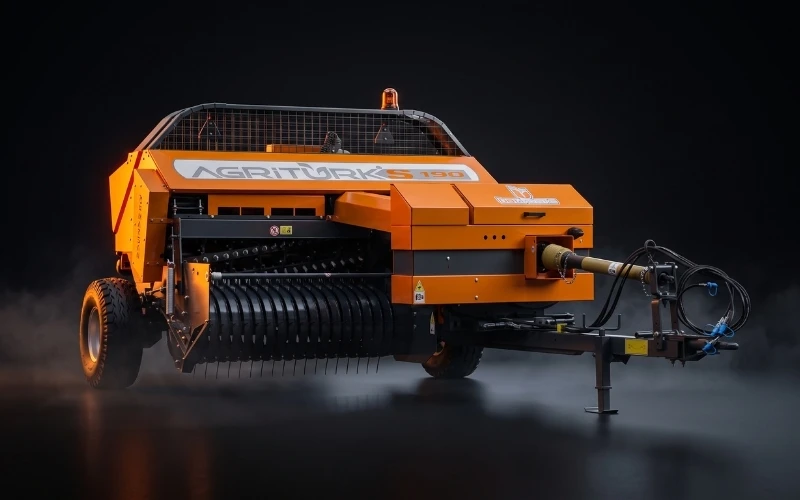
How does a baler work? In the simplest form: the tractor PTO turns the machine, the pickup takes the hay in the windrow, material fills the chamber, the piston compresses it in strokes, twine is knotted at the set length and the bale is ejected. That cycle repeats down the field. Each round, windrow thickness, moisture, speed and settings decide bale density and knot quality.
On AGRİTÜRK rectangular balers the cycle sits on a classic piston layout. 2-twine or 3-twine tying, pickup width and whether there is a feeder change the model; the logic stays. On a skid, feeder-less machine such as the S 690 Mini, feeding is simpler. On wide-feeder models, material enters the chamber more evenly and at higher capacity.
Tractor and PTO
Motion starts with the tractor. The PTO shaft connects to the flywheel and gearbox. The operator should hold the recommended PTO speed; too low breaks piston rhythm, too high adds strain and vibration. Hydraulic outlets, if any, lift the pickup or work covers. Hitch and drawbar affect alignment and turns.
Too little power means blockages, loose bales and missed knots. Extra power with the wrong speed does the same. The first answer to “how it works” is field match: even windrow, steady speed, correct PTO, twine on the spools.
The pickup takes the windrow
The pickup is a drum with spring tines. Material is taken from under the row and fed in. Held too high it leaves hay; held too low it picks stones, soil and stubble roots. That both wears tines and puts dirt in the bale. On stony ground, slowing down and setting pickup height is part of the work.
A wide pickup cuts losses on a scattered row. A narrower pickup is enough on a neat, thin row. If the rake made a poor windrow, even the best machine feeds unevenly. How the baler works depends on the implement that ran before it.
Feeding: with and without a feeder
The feeder (haşbay) pushes pickup material into the chamber and evens the rhythm. On thick, wet or long stalks it reduces blockages and fills the chamber more evenly. On compact models without a feeder, material goes more directly in. That simplicity means fewer parts and usually less power; in return the windrow needs to be very even.
Models with a fork hopper also steer the flow. The operator’s job is to hear the machine and watch bale shape so a blockage is caught early. When it blocks, stop the PTO, follow safety procedure, and never put a hand near a turning shaft or piston.
The piston compresses, the chamber fills
The chamber is the channel that gives the bale its shape. The piston packs forage forward on a set stroke. Each blow fills the chamber a little more and density rises. Bale-length setting trips the tying mechanism at a given length. Too short means frequent knots and low output; too long can mean break-up and awkward stacking.
Density is the joint result of piston force, feed rate and moisture. The same machine makes a light bale on a thin dry row and a heavy one on a thick row. The operator can raise density by slowing and “feeding” the row. Overload wears belts, bearings and housings. Good work holds a regular rhythm, not the limit.
Knotting and the twine path
When the chamber reaches the set length, twine wraps the bale and the knotter ties. A 2-twine machine has two lines, a 3-twine three. Correct spool fit, tension-spring setting and clean knotter jaws decide that moment. If twine has run out, been threaded wrong or the jaws are dull, the bale comes out open.
Missed knots are among the most common field stops. The idea is simple; the twine path still clogs with dust, chaff and moisture. Daily cleaning, oiling the knotter and the right twine are the maintenance face of “how it works”. A dead knotter costs more than a working piston because every open bale is rework.
Ejecting the bale and the skid
The tied bale is pushed out the rear. A skid helps the machine find balance as it slides on the surface. Wheeled models differ in track and transport. Ejected bales lie in a row for a trailer or loader. A clean eject speeds the next collection. Crooked, torn or slack-twine bales fall apart in the stack.
On some lines bale size is fixed by the model; the operator still changes actual weight with field speed and the windrow. “Bale size” and “bale length” in the spec table are chamber geometry. Kilos in the field move with crop and moisture. Knowing that difference is understanding the machine without brochure exaggeration.
Operator rhythm and safety
A good pass looks like this: PTO at the recommended speed, pickup sitting on the row, speed steady, even bales leaving the back, knot sound regular. Sudden acceleration brings blockages. Reverse with the PTO off. When clearing a jam the shaft must be stopped and guards in place. A turning flywheel and piston are among the most dangerous places in farming.
At the end of the day check twine stock, tines, belt tension and the knotter. If the harvest window is open tomorrow, the machine should be ready. “How it works” is not only a diagram; it is this discipline repeated every day.
Field tips: sound, shape, speed
An experienced operator reads the machine by ear as much as by eye. A clean piston beat is a regular knock; a dull, uneven sound can warn of a blockage or slack belt. Bales should have square corners, tight twine and similar length. If one bale is fat and the next thin, feed is surging: the windrow is broken or speed keeps changing.
Lifting the pickup a little on turns, slowing at a stony headland, changing the spool before twine runs out are simple habits that save the day. For a new user the first-day goal is not a record bale count but a round without blockages or open bales. Once the rhythm sits, capacity follows. Ürmaksan authorised service helps that rhythm start right on first setup — knotter setting and PTO match.
In short the baler picks up, compresses with the piston, ties with twine and leaves the bale in the field. Those four steps, with the right tractor, windrow and a maintained knotter, turn hay and alfalfa stalks into winter-ready bales. Ürmaksan AGRİTÜRK models offer that cycle at different capacities; the idea does not change from field to field.